Clematis need deep, fertile, moist but well-drained soil, a spring mulch of compost or manure and, where feeding is needed, a high-potash feed rather than nitrogen. Water deeply rather than often: at least once a month in the first year, and up to twice a day for pots in hot weather.
What soil do clematis need?
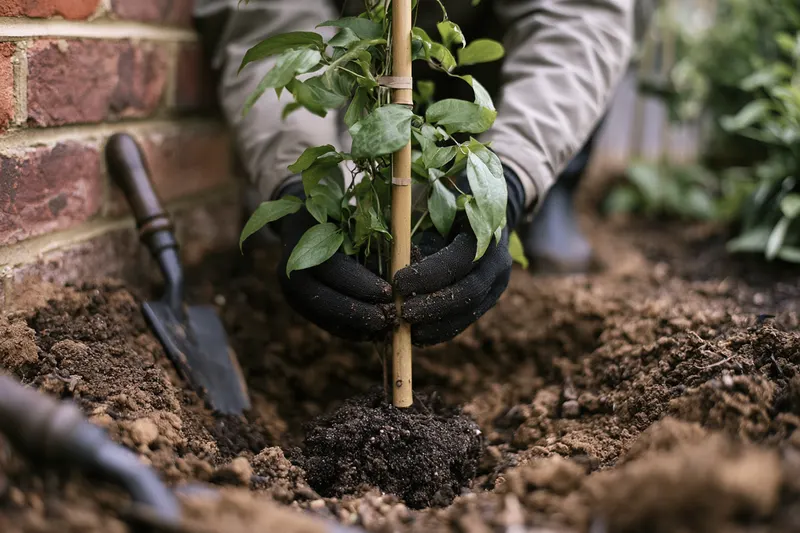
Clematis grow best, says the RHS, in deep, fertile, moist but well-drained soil, and in fertile ground regular feeding isn't needed. Instead, spread leaf mould, garden compost or well-rotted manure around the base each spring, keeping it clear of the stems to avoid rot. The mulch feeds the soil, holds moisture and keeps the roots cool.
How do you feed clematis in the ground?
Not every clematis needs the same treatment. The British Clematis Society distinguishes heavy-feeding large-flowered hybrids from small-flowered types, while plants in pots depend on you for everything.
Feeding by type of clematis
| Large-flowered hybrids | Small-flowered types | In containers | |
|---|---|---|---|
| Appetite | Heavy feeders | Need less | Depend entirely on you |
| Main feed | High-potash, in spring | Blood, fish and bone, spring | Liquid feed, spring–summer |
| Follow-up | Again a few months later | Bone meal in autumn | Bone meal in late autumn |
| Extra | Ripens stems, improves colour | Overfeeding: leaves, few flowers | Fresh top 5cm each spring |
Why potash rather than nitrogen
Potassium (potash) supports flowering, while nitrogen pushes leafy growth. Tomato feeds are a widely available high-potash liquid; for granular feeds, check the N:P:K ratio and choose one with a relatively high K figure.
If a clematis won't flower
The RHS says the commonest reason is unsuitable conditions: soil too dry or too wet, or the top of the plant in deep shade. Pruning at the wrong time comes next (see clematis pruning groups). If site and pruning are right, try sulphate of potash in late winter or early spring.
How do you feed clematis in pots?
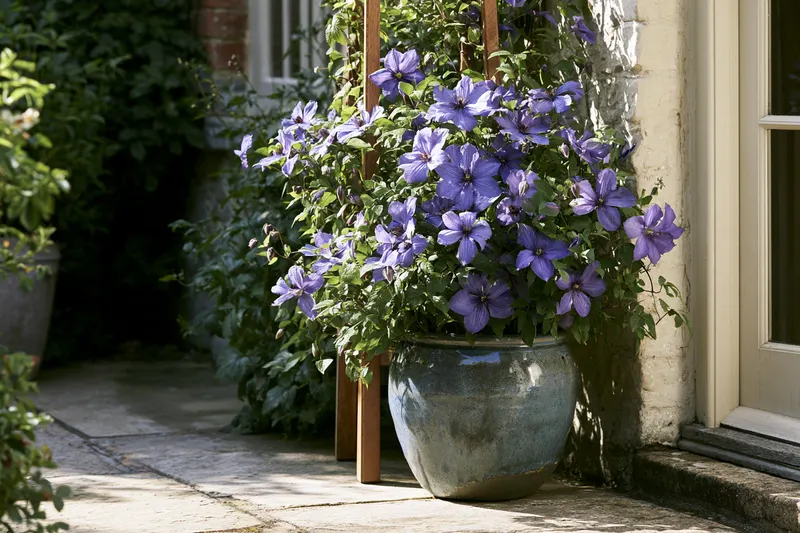
A clematis in a pot can only draw on the compost you give it. The RHS recommends an organic, general-purpose liquid fertiliser at the dose on the pack, and the British Clematis Society a half-strength high-potash feed every fortnight for large-flowered types. Our guide to clematis in containers covers pots and compost.
How often should you water clematis?
New plants
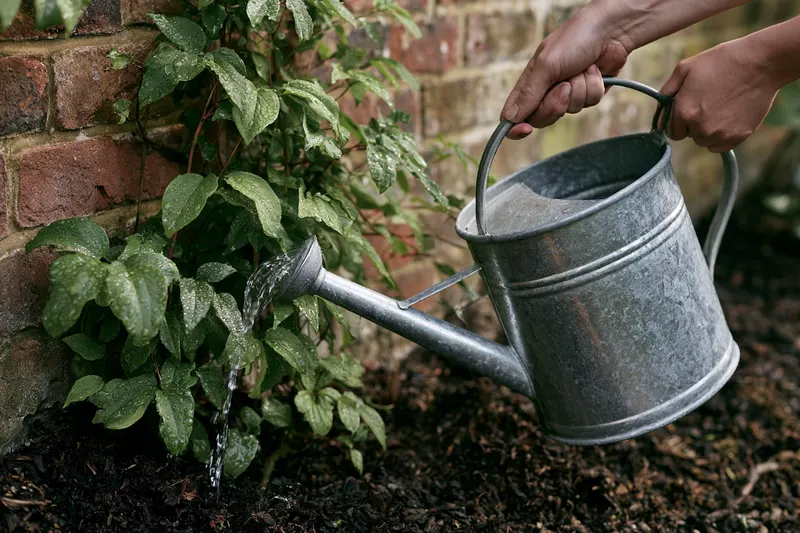
Newly planted clematis need watering in dry weather for their first few seasons. The British Clematis Society recommends at least once a month in the first year, and more often in hot, dry spells.
Established plants
Established clematis in good soil rarely need regular watering, except on very free-draining soils or in long, hot, dry spells. Plants against walls and fences are the exception, because the soil there stays dry.
How much
Containers
Pots dry out quickly, and a sheltered, south-facing pot may need watering twice a day in hot weather. Yet clematis don't tolerate sitting in waterlogged compost, so good drainage is essential.
Why does consistent watering matter?
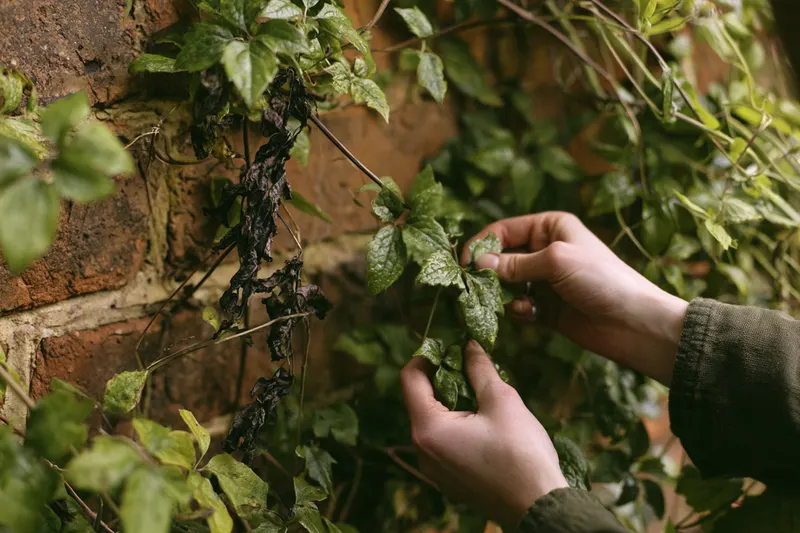
The British Clematis Society points out that alternating between soaking and complete drying of the root area stresses clematis and makes them prone to powdery mildew. Wilt, too, usually strikes plants already stressed by lack of water at the roots (see clematis wilt).
How do you keep clematis roots cool?
Keep roots cool and steady
- Base shaded with low plants or stones
- Spring mulch kept clear of the stems
- Pots topped with grit, sunny side shaded
- Not planted tight against a wall
- Wall-side plants checked even after rain
- Watered before the soil dries out completely
What are the common mistakes?
The classic errors are watering little and often, so only the top few centimetres are ever moist, and letting pots dry out completely before flooding them. Avoid high-nitrogen feeds such as lawn fertiliser, which give leaves instead of flowers, and fix the site or the pruning before feeding harder.
A simple year
A clematis year
Questions we get asked
What is the best feed for clematis?
A high-potash feed such as tomato feed, because potassium supports flowering while nitrogen pushes leafy growth. In fertile soil, the RHS says a spring mulch is enough.
How often should you water a newly planted clematis?
At least once a month in the first year, says the British Clematis Society, and more often in hot, dry spells. Keep watering in dry weather for the first few seasons.
Why is my clematis not flowering?
The RHS says the commonest reason is unsuitable conditions: soil too dry or too wet, or the top of the plant in deep shade. Pruning at the wrong time comes next.
How often should you feed clematis in pots?
Every fortnight for large-flowered types, with a half-strength high-potash feed, according to the British Clematis Society.
Mulch every spring, water deeply (about 30cm down) rather than little and often, and feed for flowers with potash, not nitrogen. Large-flowered hybrids and pot-grown clematis need regular feeding; small-flowered types in good soil need very little.
Our sources
- How to grow clematis (RHS) — Annual 5–7.5cm mulch, no regular feeding in fertile soil, deep watering to 30cm and container watering April–October.
- What's wrong… (British Clematis Society) — High-potash feeding for large-flowered types, lighter feeding for small-flowered types, and stress from irregular watering.
- Growing in containers (British Clematis Society) — Half-strength high-potash liquid feed every fortnight for large-flowered clematis in pots.
- Clematis problems: frequently asked questions (RHS) — Causes of poor flowering and the use of sulphate of potash in late winter or early spring.