Most clematis problems come down to a few causes: the wrong spot, the wrong pruning time, or roots that are too dry or too wet. Here are short answers to the questions gardeners ask most, based on RHS and British Clematis Society advice.
Test your clematis know-how
01Your clematis flowers in April and you don't know its group. Prune it in February?
RHS rule: if it flowers before June, don't prune it in winter, or you remove this year's flowering wood.
02How deep should a large-flowered hybrid's rootball sit?
The RHS advises 5–7.5cm below the soil surface for large-flowered hybrids; most other types go just below.
03Minimum pot size recommended by the RHS?
The RHS recommends a pot at least 45cm deep and wide, filled with soil-based compost.
04Lots of leaves, few flowers on a small-flowered clematis. A likely cause?
The British Clematis Society says overfeeding small-flowered types gives abundant foliage but poor flowering.
05Which clematis are mainly affected by true clematis wilt?
The RHS says wilt mainly affects large-flowered hybrids; on other types, drought or slugs are likelier causes.
Pick an answer – the explanation appears straight away.
Why isn't my clematis flowering?
The RHS says the most common cause is unsuitable growing conditions. Clematis want a moisture-retentive but well-drained soil, with cool, shaded roots and the top growth out of deep shade. Herbaceous types need full sun.
Pruning at the wrong time is the next suspect, because it can remove the wood that would have flowered. The British Clematis Society adds that overfeeding small-flowered types produces plenty of leaves but few flowers.
Not flowering? Check these first
- Top growth out of deep shade
- Roots cool and shaded
- Soil moist but well drained
- Pruned at the right time for its group
- Small-flowered types not overfed
- Try sulphate of potash in late winter (RHS)
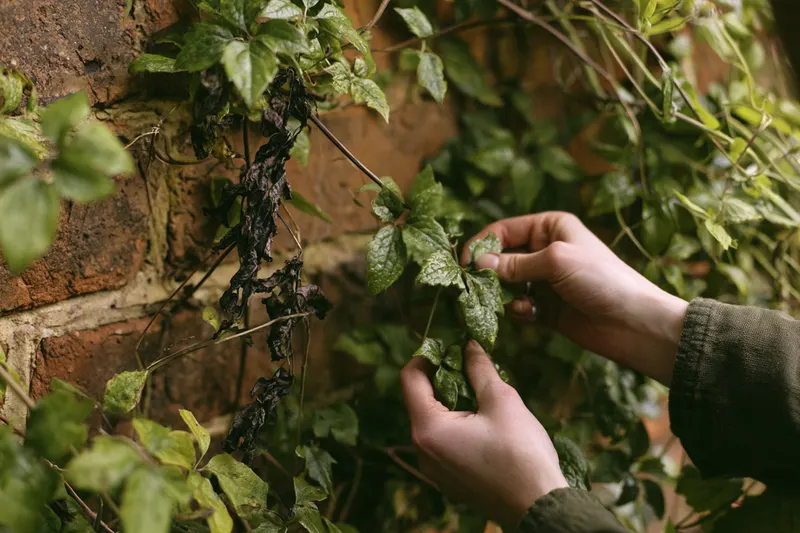
My clematis has suddenly collapsed. Is it wilt?
Not necessarily. The RHS lists slugs and snails, waterlogging, vine weevil grubs, root diseases, hot dry soil and physical damage among the causes of dying shoots. True clematis wilt mainly affects large-flowered hybrids.
Is it really wilt? A quick check
- Soak the rootsGive about two gallons of water over the root area.
- Wait an hourIf stems still droop, wilt is likely (British Clematis Society).
- Cut backPrune affected stems, or the whole plant, to ground level.
- Bin the pruningsDon't compost them.
- Feed and waterApply clematis or rose feed and keep well watered.
Our guide to clematis wilt covers recovery in more detail.
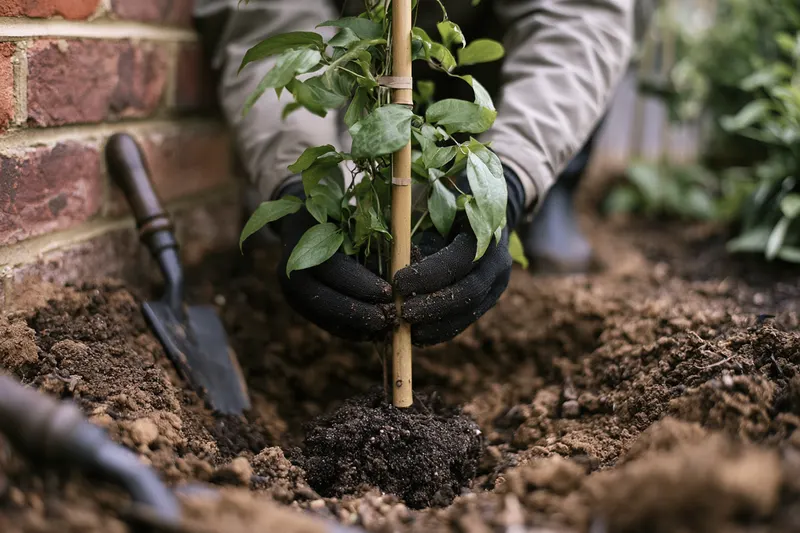
How deep should I plant a clematis?
It depends on the type. The RHS advises setting large-flowered hybrids with the top of the rootball 5–7.5cm below the soil surface, and other types, including evergreens, species such as C. viticella and herbaceous clematis, just below it. The British Clematis Society suggests planting large-flowered types 10–15cm deeper than they were in the pot.
How deep to plant (top of rootball below soil)
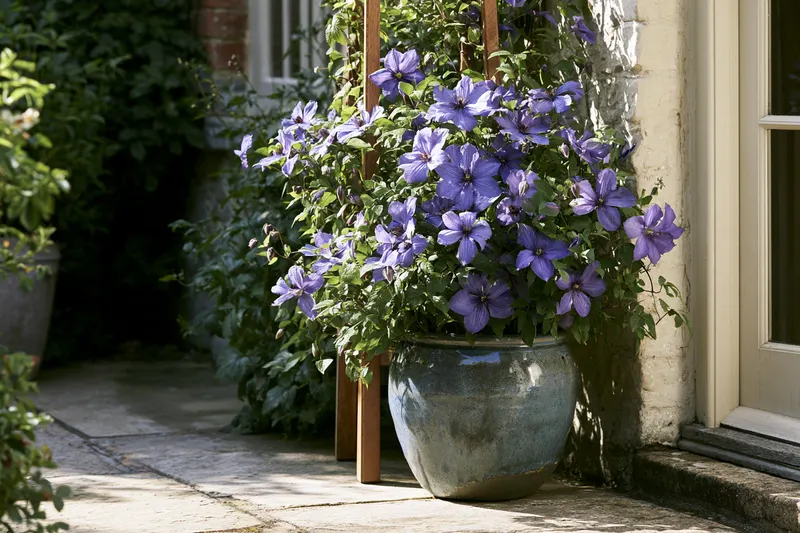
Can I grow clematis in a pot?
Yes, if the pot is big enough. The RHS recommends at least 45cm deep and wide, with peat-free, soil-based compost such as John Innes No. 2. Water most days from April to October and feed with a liquid fertiliser through spring and summer.
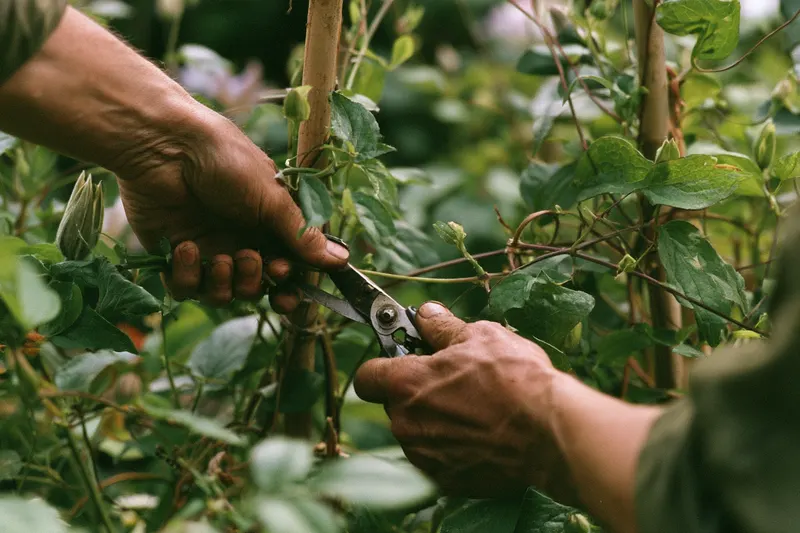
How do I find out which pruning group mine is in?
Check the label first. If it is lost, watch when the plant flowers: the RHS rule is that a clematis flowering before June should not be pruned in winter, while one flowering from late June onwards can be pruned in February. See clematis pruning groups explained.
What should I feed it with?
In fertile soil, the RHS says clematis need no regular feeding. The British Clematis Society suggests a half-strength, high-potash liquid feed every fortnight in the growing season for large-flowered types, and blood, fish and bone in spring with bone meal in autumn for small-flowered types. More on timing in feeding and watering clematis.
Why are the first flowers green?
Usually because of low temperatures while the buds were forming, especially on pale or white cultivars. If green, distorted flowers persist all season, the RHS warns it may be green flower disease, and affected plants should be destroyed.
When is the best time to plant?
The RHS recommends spring or early to mid-autumn, when the soil is warm and moist. Avoid waterlogged, frozen or very dry soil.
Questions we get asked
How big a pot does a clematis need?
At least 45cm deep and wide, says the RHS, filled with peat-free, soil-based compost such as John Innes No. 2.
When is the best time to plant clematis?
In spring or early to mid-autumn, when the soil is warm and moist, according to the RHS.
Is clematis wilt the only cause of sudden collapse?
No. The RHS lists slugs and snails, waterlogging, vine weevil grubs, root diseases, hot dry soil and physical damage among the causes.
Why are my clematis flowers green?
Usually because of low temperatures while the buds were forming, especially on pale cultivars. Green, distorted flowers all season may be green flower disease.
Most flowering failures come from a poor site or badly timed pruning; check conditions first, plant large-flowered hybrids deeper than other types, and use the June rule if you don't know the pruning group.
Our sources
- Clematis problems: frequently asked questions (RHS) — Causes of poor flowering and shoot dieback, sulphate of potash, green petals and green flower disease.
- How to grow clematis (RHS) — Planting depths, planting times, 45cm pots, container watering and feeding, wilt on large-flowered hybrids.
- Clematis: pruning (RHS) — Rule for unknown groups: flowering before June, don't prune; from late June, prune in February.
- What's wrong… (British Clematis Society) — Wilt soak test, cutting back and replanting, overfeeding small-flowered types, feeding by type.
- Growing (British Clematis Society) — Planting large-flowered types 10–15cm deeper than in the pot; fortnightly half-strength potash feed.