Most clematis are deciduous summer climbers, but a small group keeps its leaves all year or flowers when little else does. Grown well, they bring flowers in the depths of winter, scent in early spring and a green screen across a fence in January.
What they have in common
Nearly all belong to pruning group 1: they flower on growth made the previous year, so need little or no winter pruning. They are also less hardy than summer types. The RHS rates C. cirrhosa, C. armandii and C. × cartmanii 'Avalanche' as H4 and recommends a sheltered position, protected from cold winds.
RHS hardiness: coldest winter temperature
The main evergreen clematis
| C. cirrhosa | C. armandii | 'Avalanche' | |
|---|---|---|---|
| Height (RHS) | 2.5–4m | 4–8m | 2.5–4m |
| Flowers | Cream bells, often flecked | Fragrant, creamy-white clusters | White sprays, about 4cm |
| Leaves | Evergreen | Glossy, up to 15cm | Finely divided, glossy |
| Best spot | Sheltered south or west wall | Large, sunny, sheltered wall | Cold greenhouse in cold areas |
Clematis cirrhosa: flowers in winter
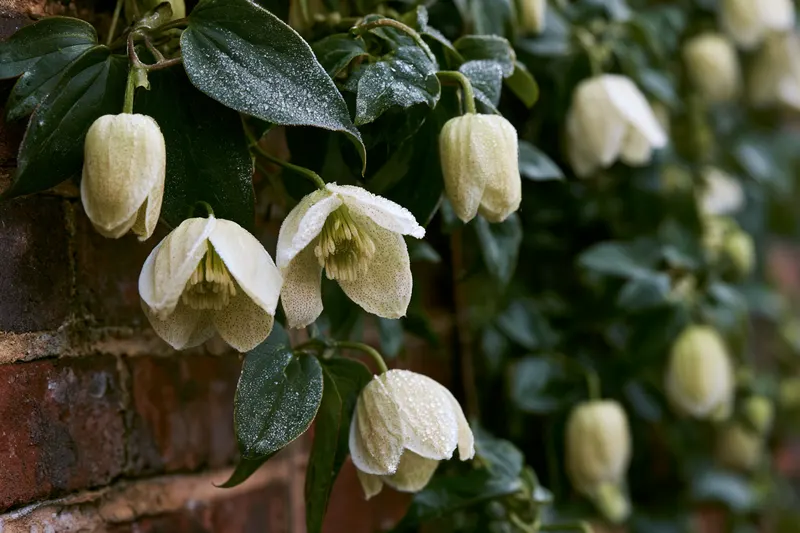
An evergreen Mediterranean species with pale yellow to cream bell-shaped flowers, sometimes flecked red inside. Plant it where you will see it from a window or path, because it flowers when few people linger in the garden.
Cultivars to look for
'Freckles' has creamy flowers heavily speckled with red, 'Wisley Cream' plain cream ones; both hold the AGM, and the RHS marks them as plants for pollinators on mild winter days. 'Jingle Bells' bears pale yellow to creamy-white bells on the previous year's growth.
Clematis armandii: scent in spring
A vigorous climber from China with leathery, glossy leaves and clusters of fragrant flowers. It can exceed 8m if not pruned, so it needs a long fence, a pergola or a large wall; 'Apple Blossom', with pink-tinged flowers, holds the AGM.
Hard frosts and cold winds can scorch the large leaves, so give it your warmest, most sheltered wall. Like many evergreens, it sheds some older leaves through the year.
New Zealand hybrids: 'Avalanche'
A hybrid of New Zealand species with finely divided, glossy leaves and sprays of pure white flowers. In colder areas, grow it in a container in a cold greenhouse or conservatory; our guide to clematis for containers explains how.
Flowering and care calendar
Other winter and early spring clematis
The RHS also lists C. napaulensis, C. urophylla 'Winter Beauty' and 'Early Sensation'. Check the hardiness of each and give them a sheltered site.
The deciduous spring clematis of the same pruning group, such as C. alpina, C. macropetala and C. montana, are considerably hardier. In a cold or exposed garden they are the safer choice for early colour.
Where to plant
In colder northern or inland gardens, a warm wall can make the difference between success and repeated frost damage. Unlike large-flowered hybrids, they are not planted deep (see how to plant a clematis).
Siting checklist
- South- or west-facing wall, out of cold winds
- Large support for C. armandii
- Rootball just below soil level
- Cool, moist, well-drained soil; no heavy clay
- Protection from excessive summer dryness
Protecting them in a cold spell
Established plants on a sheltered wall usually come through a normal British winter, but young plants are more vulnerable. The roots matter most: even if the top growth is damaged, a plant with healthy roots can regrow.
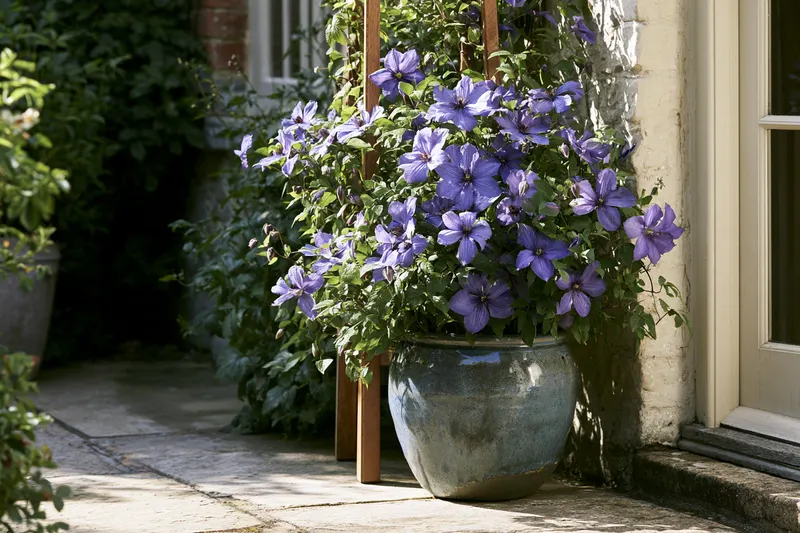
Plants in pots are more exposed, because roots in a container freeze more easily, so move pots against the house wall or into a cold greenhouse.
Pruning
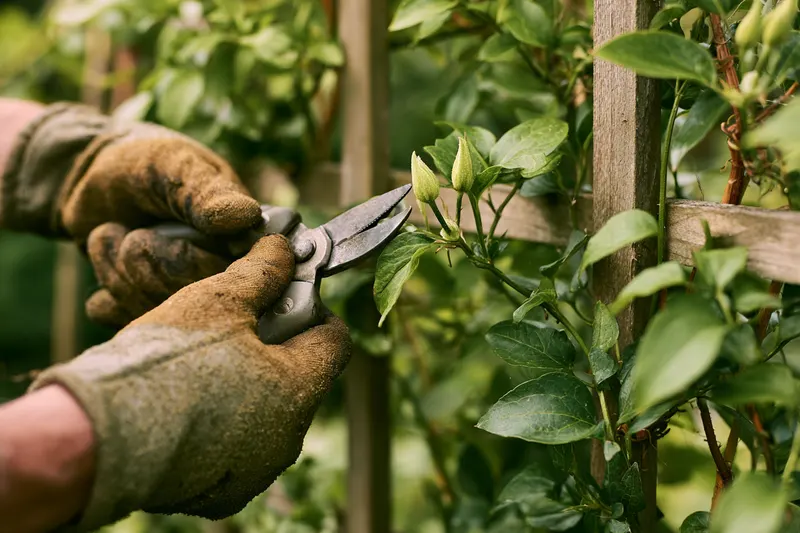
If these clematis outgrow their space, prune straight after flowering so new growth has time to mature. The British Clematis Society advises leaving the new green stems of winter-flowering types alone, because they carry the flowers, and tidying brown growth only once fresh green growth appears. See our guide to clematis pruning groups.
An overgrown C. armandii can become a tangle of bare stems with leaves only at the top. Thinning a few of the oldest stems after flowering is gentler than a hard cut; for drastic renovation, the RHS suggests cutting to about 15cm after flowering, and not again within three years.
Using them in garden design
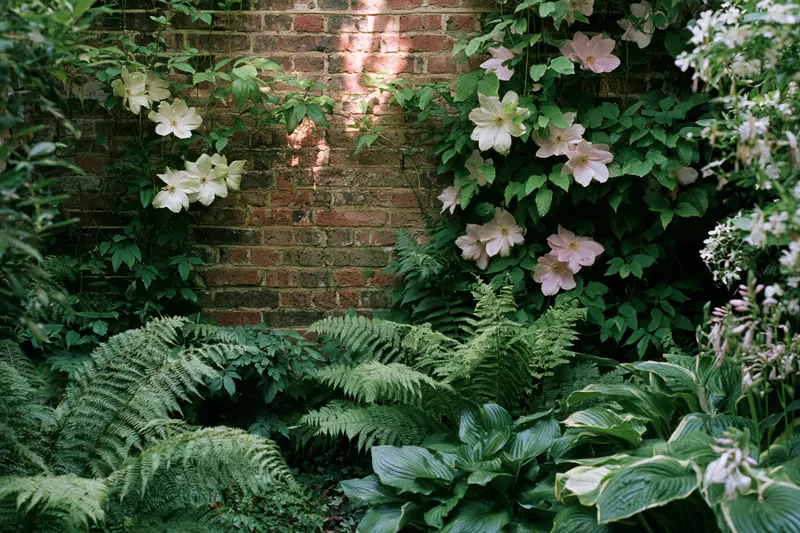
Use C. armandii to screen a fence, shed or oil tank, and plant C. cirrhosa near a door or window. An evergreen clematis can share a large support with a group 3 clematis for a second season of flowers, but the two are pruned at different times.
C. cirrhosa flowers in winter and C. armandii brings scented flowers in spring; both are evergreen, rated H4 and need a sheltered, sunny south- or west-facing wall. Plant them with the rootball just below soil level and prune only lightly, straight after flowering.
Our sources
- Winter and spring-flowering clematis (RHS) — Named cultivars with heights and AGMs, and the need for sheltered positions for evergreen types.
- Clematis cirrhosa (RHS Plants) — H4 hardiness, late winter to early spring flowering, sheltered south- or west-facing aspect, group 1.
- Clematis armandi (RHS Plants) — H4 hardiness, 4–8m height, fragrant early to mid spring flowers, sheltered aspect, group 1.
- Pruning (British Clematis Society) — Leaving the new green stems of winter-flowering clematis uncut.
- RHS hardiness rating (RHS) — Temperature ranges for hardiness ratings H4 (-10 to -5°C), H5 (-15 to -10°C) and H6 (-20 to -15°C).