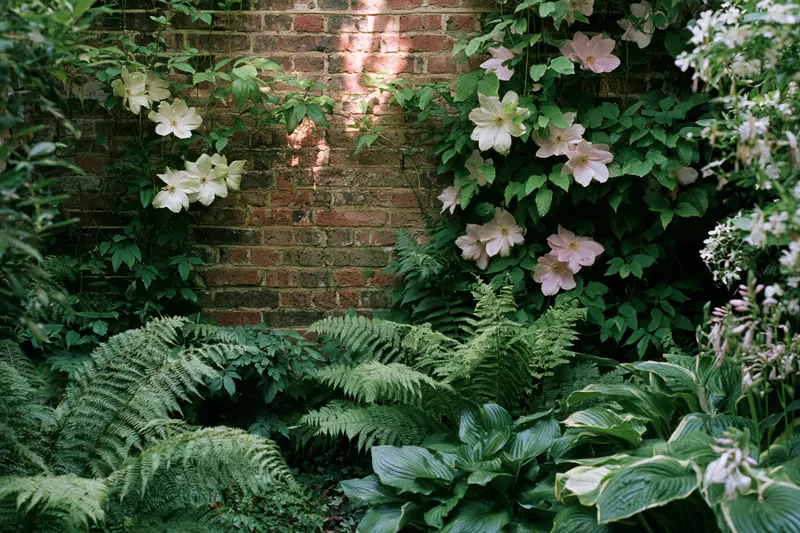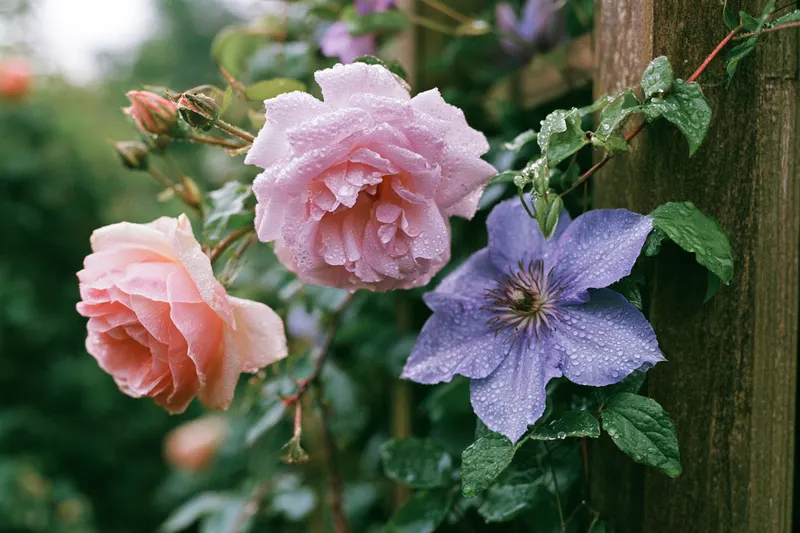
Clematis and roses are one of the great partnerships of the British garden. A climbing rose gives a clematis a ready-made frame, while the clematis adds colour before, alongside or after the roses and hides the bare lower stems many climbers develop.
Why late-flowering clematis are the usual choice
Most experienced gardeners pair roses with group 3 clematis: viticellas, texensis hybrids and late large-flowered types that flower from midsummer on the current year's growth. Their hard late-winter cut coincides with rose pruning, and because they start again from low down each year, they don't smother the rose.
The RHS also describes C. viticella as tolerant of clematis wilt, useful where the base of the clematis is hard to reach. For more on how the groups work, see our guide to clematis pruning groups.
Good clematis for roses
All of these are group 3 clematis named in RHS pruning advice.
- 'Étoile Violette': velvety, deep purple viticella flowers from mid to late summer; AGM, 2.5–4m.
- 'Polish Spirit': vigorous, with rich purple flowers; AGM.
- 'Princess Diana': a texensis hybrid with upward-facing, tulip-shaped pink flowers; AGM.
- 'Perle d'Azur': clear pale blue flowers from midsummer to early autumn; AGM. It can also be pruned as group 2.
- 'Alionushka': nodding pink bells on a non-clinging plant that needs tying in or can be left to flop into a shrub rose.
- Other viticellas: the British Clematis Society also lists 'Alba Luxurians', 'Madame Julia Correvon', 'Kermesina' and the scented 'Betty Corning'.
What to avoid
Steer clear of vigorous early flowerers, particularly C. montana, which flowers on the previous year's wood. Over a rose it builds up into a heavy mat that blocks light and is almost impossible to untangle.
Which clematis for a rose?
| Group 3 (viticellas etc.) | Group 2 hybrids | C. montana | |
|---|---|---|---|
| Winter pruning | Hard, with the rose | Light; old growth stays | None without losing flowers |
| Over the rose | Regrows from low down | More old growth | Heavy, tangled mat |
| Wilt | Viticella tolerant | Many more prone | Resistant (RHS) |
| Verdict | Best choice | Robust climbers only | Avoid |
Matching the plants
Size and vigour
A modest shrub rose suits a compact or non-clinging clematis such as 'Alionushka', while a big rambler or established climber can take a 3–4m viticella. Plant the clematis once the rose is established, so the young rose isn't overwhelmed.
A healthy host
Choose a healthy, vigorous rose with a sturdy framework of stems. On a wall or fence, make sure the support is strong enough for both plants.
Timing
The British Clematis Society suggests deciding whether the clematis should flower before, with or after its host. A once-flowering rose followed by a viticella from July stretches the season; a repeat-flowering climber with a simultaneous clematis gives a bolder display.
Colour
Purples and blues sit well with most rose colours: deep purple 'Étoile Violette' against a pale pink or white rose, or 'Perle d'Azur' with a soft yellow or apricot one. Hold a cut flower of one against the other before you commit.
Planting the clematis
Roses and clematis are both hungry, thirsty plants, and an established rose has a head start. For trees and shrubs the RHS advises planting at least 1.2m from the base, on the windward side; a rose needs less room, but the principle is the same.
Most group 3 viticellas go in with the top of the rootball just below soil level (see how to plant a clematis).
Planting beside a rose
- Out of the rose's densest root zone
- Generous hole with well-rotted organic matter
- Stems led in along an angled cane
- Base shaded with low planting or stones
- Thin stems or wires for leaf stalks
Pruning both together
Pruning rose and clematis together
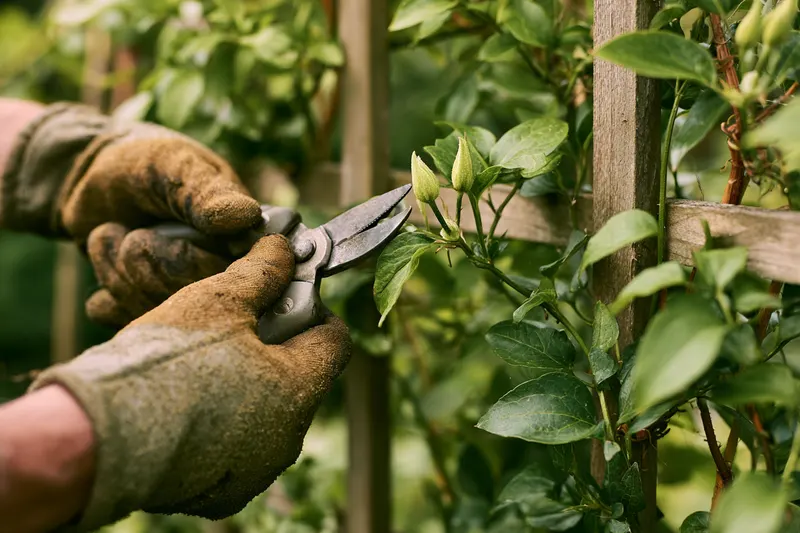
- Cut the clematisIn February or March, cut the clematis stems back to a low pair of buds.
- UntanglePull the dead top growth out of the rose as you go.
- Prune the roseWith the clematis out of the way, prune the rose in the usual way.
- Guide new shootsAs new clematis shoots appear in spring, lead them into the rose.
- Tie in looselyTie the young stems in loosely with soft twine.
How low to cut the clematis
Either height works, and a slightly higher cut gets the clematis into the rose sooner.
Feeding and watering the pair
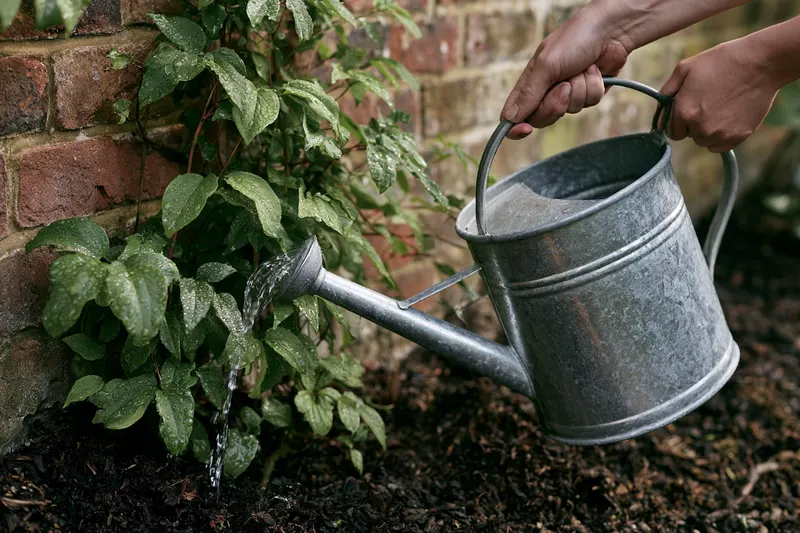
Two plants sharing one patch of soil need more support than one. Mulch both each spring, water deeply in dry spells and choose a feed with plenty of potash, which encourages flowers rather than leafy growth. Our guide to feeding and watering clematis covers this in more detail.
Pair roses with late-flowering group 3 clematis such as viticellas, 'Perle d'Azur' or 'Princess Diana', plant them a little way out from the rose's base, and cut the clematis hard in February or March when you prune the rose. Avoid vigorous montanas.
Our sources
- Clematis pruning: group three (RHS) — Hard pruning to 15–30cm and the list of group 3 cultivars, including 'Étoile Violette', 'Polish Spirit', 'Princess Diana' and 'Alionushka'.
- Viticella (British Clematis Society) — Viticella cultivars by colour and pruning to about 50cm in late February or early March.
- Growing (British Clematis Society) — Choosing a clematis to flower before, with or after its host, and checking it won't damage the host.
- How to grow clematis (RHS) — Planting into trees and shrubs: at least 1.2m from the base, on the windward side.
- Clematis wilt (RHS) — C. viticella tolerant and C. montana resistant to wilt; large-flowered hybrids most susceptible.