To renovate an overgrown clematis, prune by group: cut group 1 plants such as montana to near ground level just after flowering; cut group 2 hybrids to 30–90cm in late winter, or reduce them over two or three seasons; cut group 3 to 15–30cm in February or March. Most regrow well.
The method depends on one thing: which pruning group your plant belongs to. If you are unsure, start with our guide to clematis pruning groups before you pick up the loppers.
Renovation by pruning group
| Group 1 | Group 2 | Group 3 | |
|---|---|---|---|
| Examples | Montana, alpina, macropetala | Early large-flowered hybrids | Viticellas, late hybrids |
| When | Just after flowering | After first flush, or late winter | February or March |
| How hard | Near ground level | Gradually, or to 30–90cm | Lowest buds, 15–30cm up |
| Flowering | May be slow to return | Second flush, or one flush | Flowers on new growth |
| Repeat | Not within 3 years | Hard cut every 3–4 years | Every year |
How do you renovate a group 1 clematis?
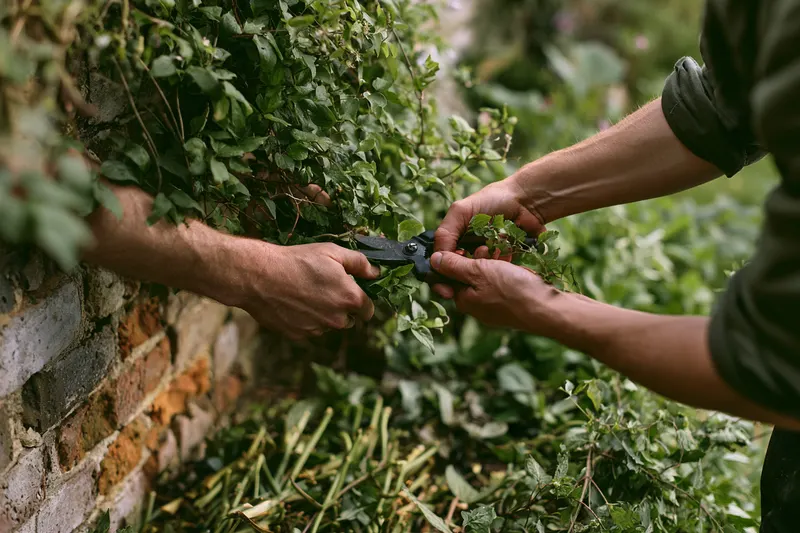
Early flowerers such as C. montana, C. alpina and C. macropetala bloom on last year's wood, so never renovate them in winter. The RHS says thinning a congested plant is possible, but renovation is usually easier: cut every stem down to near ground level just after flowering, in mid- to late spring once frost danger has passed.
Response is generally good, but give the plant time. Leave at least three years before pruning hard again.
How do you renovate a group 2 clematis?
Early large-flowered hybrids are the trickiest, because heavy pruning in late winter removes the early flowers. The RHS offers two routes.
- Gradual: prune harder after the first flush of flowers and reduce the plant over two or three seasons. You will probably lose that year's second flush, but it should flower again the following late spring.
- Hard: every three or four years, cut the whole plant to 30–90cm from the base in late winter and accept a single flush that year.
The British Clematis Society suggests that a group 2 plant with a large tangle at the top can be cut by at least half its height after the first flush.
How do you renovate a group 3 clematis?
Late-summer flowerers bloom on new growth, so an inherited, overgrown plant is simple to rescue. In February or March, cut all old stems to the lowest pair of healthy buds, 15–30cm above soil level. In cold northern gardens the British Clematis Society says pruning can wait until April.
If winter top growth looks untidy, especially on clematis grown through shrubs, you can cut the top half of the stems first to reduce bulk, then finish the job at the usual time.
When to renovate each group
On the day
Renovating an overgrown clematis
- Check for nestsLook for nesting birds before cutting; nests are protected by the Wildlife & Countryside Act 1981.
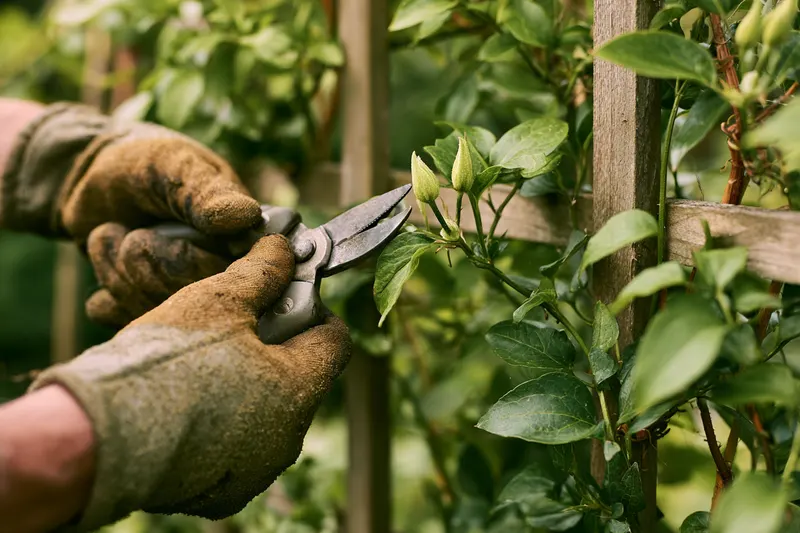
- Gather toolsLoppers for stems up to 3cm wide, a pruning saw for anything thicker.
- Free the plantIf stems are flexible, detach them and lay the plant flat to untangle.
- Repair supportsClear debris behind the trellis and fix wires while the wall is bare.
- Cut to the right heightFollow your group: near the base, 30–90cm, or the lowest buds.
- Tie in new shootsSpace new stems evenly on the support as they grow.
For very old or spindly plants, the British Clematis Society suggests a gentler approach: prune one half of the plant one year and the other half the following year. Take care with thick, old stems, as they may not readily regrow.
What aftercare does a renovated clematis need?
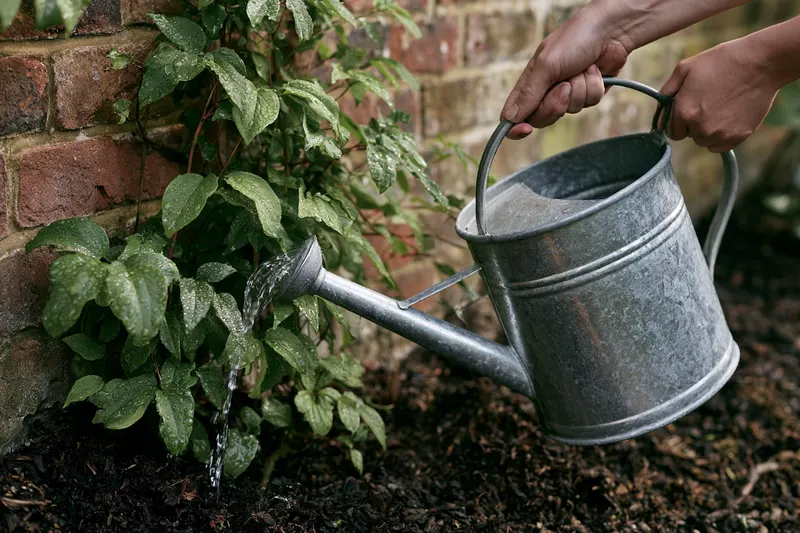
A renovated clematis has to rebuild a whole season of growth, so look after the roots. After cutting back a group 1 plant, the RHS recommends a general fertiliser, a mulch and watering in dry spells; it suggests a mulch at least 5cm thick, applied between November and February. The British Clematis Society mixes garden compost with a handful of bonemeal or blood, fish and bone. Our guide to feeding and watering clematis covers the routine.
In the first year, tie in the new shoots from the base to form a fresh framework, spacing them evenly on the support. In the second year, the RHS advises thinning the new growth, keeping the strongest, best-placed stems and removing the rest.
After drastic pruning, flowering can take a while to return. If a plant is sickly and dying back rather than simply overgrown, the RHS says replacing it is the better option.
Quick quiz: rescuing an overgrown clematis
01When should you hard prune an overgrown C. montana?
Group 1 flowers on last year's wood; the RHS says renovate just after flowering, in mid- to late spring.
02How long should you wait before hard pruning a group 1 clematis again?
The RHS advises leaving at least three years between hard prunes of group 1 plants.
03How hard can a group 3 clematis be cut in February or March?
The RHS says cut all old stems to the lowest pair of healthy buds, 15–30cm above soil level.
04What happens after a hard late-winter renovation of a group 2 hybrid?
Cutting to 30–90cm in late winter costs the early flush; the plant flowers once that season.
05Which clematis does the RHS advise against renovating?
Evergreen C. armandii does not usually respond well to renovation, according to the RHS.
Pick an answer – the explanation appears straight away.
Questions we get asked
Can you cut a clematis right down to the ground?
Yes, for most clematis: the RHS lists them among climbers that regrow well after drastic pruning. Time it by group, and take care with very thick old stems, which may not regrow.
When should you cut back an overgrown montana?
Just after flowering, in mid- to late spring once frost danger has passed. Never in winter, because montana flowers on last year's wood.
How long before a renovated clematis flowers again?
It can take a while. A group 2 plant reduced gradually should flower again the following late spring; leave a group 1 plant at least three years before pruning hard again.
Should I replace an old clematis instead?
Yes, if it is sickly and dying back rather than simply overgrown: the RHS says replacing it is then the better option.
Cut group 1 clematis almost to the ground just after flowering, then leave them for three years; reduce group 2 hybrids gradually or to 30–90cm in late winter; cut group 3 to the lowest buds in February or March, and mulch afterwards.
Our sources
- Climbers: renovating overgrown plants (RHS) — Timing, tools, untangling, aftercare and the first two years after drastic pruning.
- Clematis pruning: group one (RHS) — Renovating montana-type clematis, the three-year interval, mulching and the C. armandii exception.
- Clematis pruning: group two (RHS) — Gradual reduction after the first flush, or a hard cut to 30–90cm every three or four years.
- Pruning clematis (RHS beginner's guide) — Inherited overgrown group 3 plants cut to 15–30cm in February or March.
- Pruning (British Clematis Society) — Halving tangled group 2 plants, renovating old plants over two years and mulching with compost and bonemeal.